
Wine takes a background seat
I do watch old cooking shows at night to relax. Jacques Pépin is still a favorite, but so are the old “Great Chefs” series on Discovery. Check out this one from Chef Charlie Palmer (who lives in Healdsburg now) when he was head chef at Aureole in NY. Enough nostalgia…on with the article.
Share Case by Case, by David Mastro Scheidt
The PBS Model: The Soft Sell of Jacques Pépin
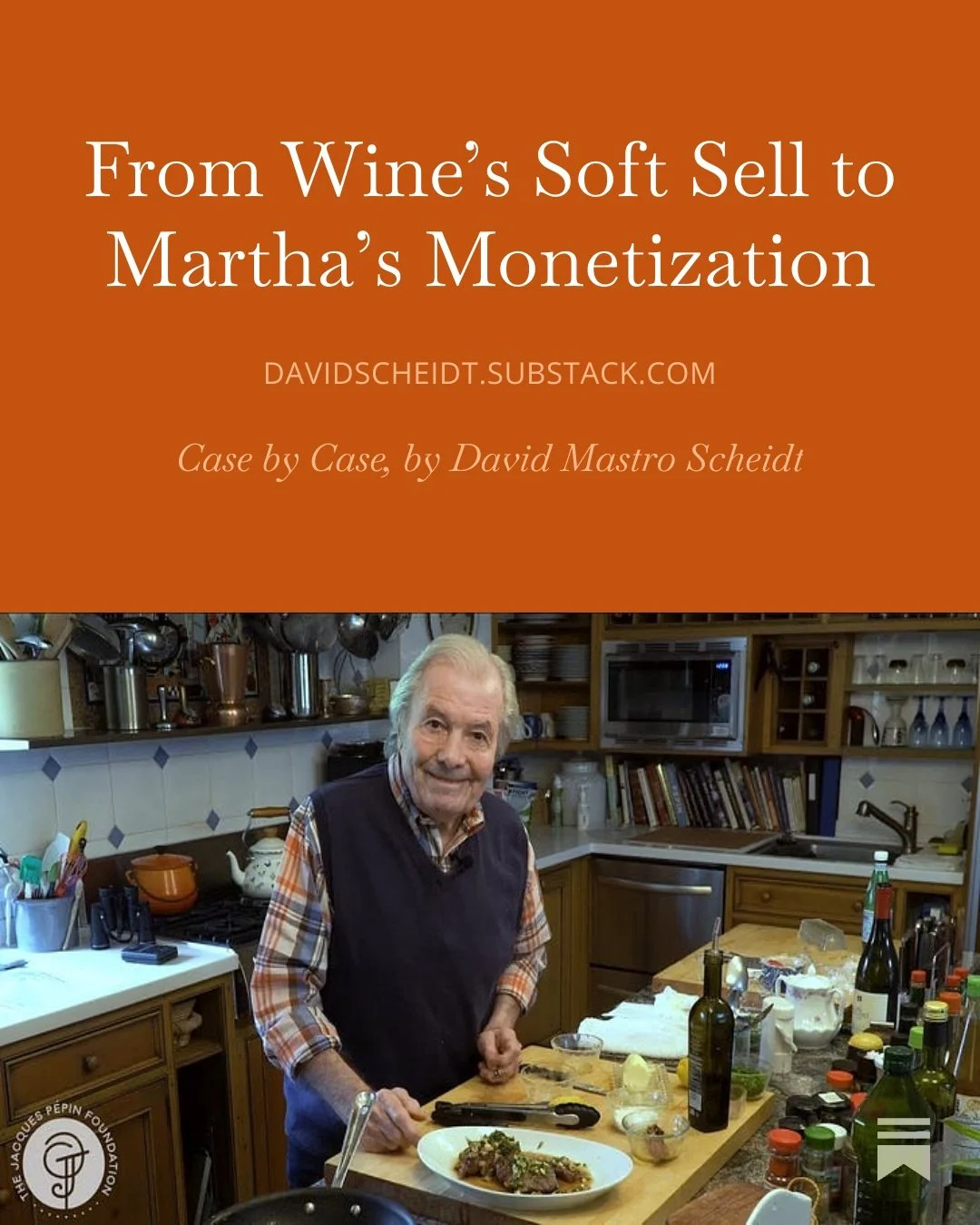
I have fond memories when I was a kid of PBS and Cooking with Jacques Pépin. I learned a lot from him, next to my mom, Jacques was my second cooking teacher. Now that I look back, through the magic of Amazon Prime Live TV and YouTube, Jacques nearly always had a branded wine sponsor and always cooked with wine, even offered a branded pairing suggestion at some point during the show. I haven’t done an explicit episode by episode analysis, but Jacques’ closing remark of “Happy Cooking” was usually with a glass of wine in hand, a smile on his face, and a perfect 3-course menu prepared in less than 30 minutes. Just look at his set-up in this video from KQED, I can see a branded bottle of wine in the frame along with a plastic Pellegrino bottle — it’s like you just came over for lunch at a friend’s house.
The Network Model: Alcohol as Background Noise
Bobby Flay on Beat Bobby Flay sipping a plastic tumbler of whiskey in the Cacio e Pepe challenge (a very funny episode). But it’s used as a gag.
Bobby and Giada in Italy. There’s wine in the background and the foreground when they’re in Italy, like a set prop from Roman Holiday. Sure they clink glasses, but I have no idea what they are drinking.
Ina, Ree? It’s not front and center to their cooking or their brand. We remember “Jeffrey” from Ina more than we remember wine on her table.
Stanley Tucci and the lack of wine in his Italian TV show, check out https://wineeconomist.com/2025/07/08/tucci-2/ for an in-depth analysis of the show.
Top Chef has shown to incorporate wine and food into the show over its 22 seasons. It’s not a ‘front and center’ item, but it happens. And how can it not? The show gets paid through ad and sponsorship revenue from a large alcohol brand, which is seen usually during the final episode. The SHOW gets paid, NOT the TALENT.
I don’t believe cable networks have shadow banned wine product placement out of legal concerns or focus groups. The celebrity economics have changed.
The Social Media Model: Pay to Play
Wine influencers on Instagram and TikTok are celebrities within their own ecosystem. Individually they are mainly small dollars when compared to any of the above cable network celebrities, but their influence adds up when looked at collectively and collaboratively on IG/TT. Influencers have been charging for their direct wine branding sway for years, some disclose it, others don’t. Wine influencers are a fragmented industry but have global reach with their particular audience. It’s the most accessible pay to play market for direct brand placement with a celebrity/influencer.
Over-the-top popular chef and influencer Olivia Tiedemann with 4.4 million followers on Instagram doesn’t incorporate wine into her regular posts unless she gets paid. Check out the February 3, 2025 post for her explicit paid partnership. She’s a major influencer in the food world and she is directly monetizing her brand — which is her.
That said, it’s likely Olivia could and will transition to the next level…Martha’s Level
Martha’s Model: Monetize the Brand. The Celebrity is the brand!
Martha Stewart understands monetization. From QVC to 19 Crimes (along with Snoop and their faces on the label). She’s the one who’s branding, monetizing directly, taking control of it. Not an afterthought, a background prop or a casual mention on her shows. Her name and face IS the branding. She’s the master of her own brand. Cookware, homegoods, wine, everything.
When you have audience currency, why accept sponsorship pennies from a boutique winery when you can own the revenue stream?
If you are a chef, a food celebrity, an influencer, or just a major star and have that much pull and online audience currency, you want more than a pittance of a sponsorship from a winery, you want your own brand to monetize. Why shill for another brand and make pennies, when you can make real money with your own brand?
Wine hasn’t disappeared from food media, it has transformed and been monetized more efficiently. Celebrities today understand that building their own alcohol brands (look at tequila) generates more revenue than simply endorsing another, competing brand.